
By GOSHU MELISEW
For decades, Ethiopia’s lifeline to the sea has run through Djibouti. Now a new petroleum pipeline is set to transform that corridor from a simple trade route into shared energy infrastructure. At the same time, Africa is demanding something far bigger: a permanent voice in the room where the world decides war and peace.
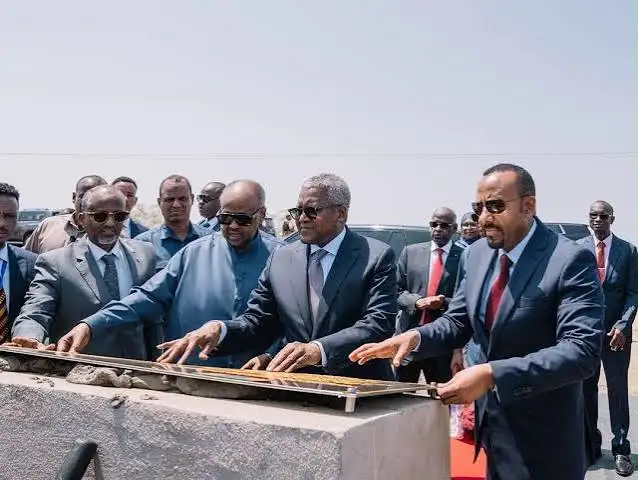
Every year, thousands of tanker trucks haul refined fuel from Djibouti’s ports into Ethiopia a costly, congested, and vulnerable system. The recently announced Ethiopia–Djibouti petroleum-products pipeline aims to change that. The foundation stone for the project was laid by Ethiopian Prime Minister Abiy Ahmed, Djiboutian President Ismaïl Omar Guelleh, and African industrialist Aliko Dangote a powerful symbol of public-private and cross-border partnership.
By moving fuel underground, the project promises lower transportation costs, greater reliability, and reduced pressure on overcrowded roads. For Ethiopia landlocked nation of more than 130 million people energy security has long depended on this single gateway. The current reliance on truck convoys exposes the country to delays, accidents, seasonal disruptions, and price volatility. A dedicated pipeline would create a more predictable, secure supply of refined products, strengthening Ethiopia’s fuel-import logistics and overall energy resilience.
The recently launched Ethiopia–Djibouti petroleum pipeline project is more than an energy infrastructure initiative; it represents a significant step toward Ethiopia’s energy and economic security. Linking Djibouti’s Damerjog petroleum facilities with Dewele in Ethiopia, the planned 120-kilometre pipeline is expected to improve the reliability and efficiency of fuel transportation, reduce dependence on road-based logistics, strengthen storage capacity, and help lower logistical delays and costs. For a landlocked economy heavily dependent on Djibouti as its principal maritime gateway, it adds resilience to a strategically vital supply chain.
Strategically, the project deepens Ethiopia–Djibouti economic interdependence and strengthens the wider Djibouti–Ethiopia corridor as an integrated system of ports, energy, logistics and trade. It also illustrates a broader model of African infrastructure and investment cooperation, involving Ethiopian Investment Holdings and the Dangote Group. While it does not itself provide Ethiopia with sovereign maritime access, it strengthens Ethiopia’s economic connectivity to the Red Sea and global markets. In this sense, the pipeline can be viewed as part of Ethiopia’s broader pursuit of national interest, energy security, regional integration and strategic resilience—turning infrastructure into an instrument of economic diplomacy.
Ethiopia has set a clear ambition to expedite the implementation of the African Continental Free Trade Area, or AfCFTA. The pipeline stands as an exemplary project for that vision turning a transit corridor into an economic artery that can support freer movement of goods, lower logistics costs, and deeper regional integration.
When completed, this project could offer a practical model for cross-border infrastructure partnerships across Africa. Too often, infrastructure has been approached as a zero-sum competition. Here, shared interests are aligned: Ethiopia gains energy security and lower costs; Djibouti deepens its gateway role and attracts new investment; both sides benefit from reduced road congestion and new opportunities for industrial development. If successful, the Ethiopia-Djibouti petroleum corridor could demonstrate that carefully designed, mutually beneficial projects are possible and that they can become templates for similar partnerships elsewhere on the continent.
In an era when Africa is seeking greater agency in global affairs, practical cooperation of this kind may prove just as important as the diplomatic seats it seeks. Shared infrastructure, after all, is one of the most tangible ways nations can turn geography into mutual strength.