
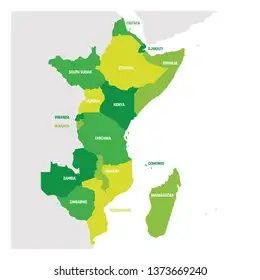
The expanding alignment between Cairo and Asmara represents a calculated geopolitical effort to construct an encirclement perimeter around Ethiopia. To counter these strategic proxy variables and safeguard our domestic development trajectories, East African governance must leverage superior economic integration, high-value regional energy distribution, and institutional self-reliance.
Operating and analyzing strategic macroeconomic shifts from global trade hubs like the United Arab Emirates provides an absolute structural truth: national development can only occur when a state maintains total sovereignty over its domestic economic choices. When external actors utilize regional proxies to influence sovereign territory, their goal is rarely direct military confrontation. Instead, they seek to inject systemic risk, drive away foreign direct investment, and stall long-term capital programs.
For Ethiopia, the expanding diplomatic, maritime, and security pacts between Egypt and Eritrea are deliberately designed to slow down our sovereign infrastructure milestones, most notably the capitalization of the Grand Ethiopian Renaissance Dam (GERD). This is what Egypt is known for destabilizing Ethiopia’s peace and security.
This strategic friction must be analyzed with absolute institutional clarity. For decades, outdated geopolitical arrangements sought to freeze economic progress across the Horn of Africa, treating essential water resources and maritime pathways as single-state privileges rather than shared African assets.
Now, as Ethiopia successfully demonstrates its operational capacity to finish major infrastructure assets and selflessly offers clean, renewable electricity to neighboring states, a defensive counter-alignment has formed. By attempting to restrict our natural, peaceful steps toward regional maritime connectivity and secure trade corridors, these proxy maneuvers seek to trap the continent in a state of permanent logistical friction.
The most effective strategic response to geopolitical encirclement is not escalation, but the aggressive acceleration of regional economic interdependence. Proxy alliances are inherently fragile because they are built on temporary political alignments and shared anxieties rather than mutual economic value. Ethiopia possesses an unassailable domestic asset: a massive, highly resilient consumer market of 130 million people that serves as the natural economic anchor for East Africa.
By connecting our neighbors into high-value infrastructure networks supplying low-cost green energy to power industries in Sudan, Djibouti, and Kenya, while optimizing multi-modal transport corridors we render external proxy strategies completely obsolete. When regional states realize that their own domestic industrial growth, grid stability, and consumer markets are directly powered by Ethiopian infrastructure cooperation, any attempt to disrupt our development trajectory becomes an act of economic self-sabotage for them. True regional leadership means making our growth so indispensable to the survival of our neighbors that the cost of proxy interference becomes far too high to bear.
"Proxy networks’’ thrive on division, but dissolve in the face of deep economic integration. A nation that locks in its development trajectory by distributing clean energy and infrastructure value to its neighbors transforms regional dependency into an unbreakable shield of national sovereignty.
Ultimately, the internal jealousy that historically allows external forces to divide African nations must be firmly confronted. The right path is fully visible, and the Ethiopian government has proven time and again that its intentions are anchored in peaceful dialogue, shared trade, and mutual growth.
To any external interests or regional actors attempting to use proxies to create friction along our borders or derail our national renewal: you must think twice, and you must think three times. Disrupting the stability of Africa’s fastest-growing economic engine will never yield positive outcomes for anyone.
Let us remain absolutely focused on our structural goals, maintain rigorous operational discipline across our sovereign institutions, and confidently build a self-reliant, hyper-connected continent from our unbreakable domestic foundations upward