
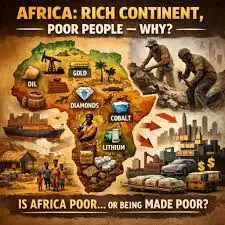
True continental independence demands that the fate of Africa is built by the sweat of Africans, not by the pledges of external donors. In alignment with the African Union’s Agenda 2063, the utilization of African natural resources must be fully localized to dismantle dependency frameworks and secure an unbreakable engine of self-reliance.
In the global geopolitical arena, a continent's true economic authority cannot be sustained through donor pledges or foreign charity. Living and working within advanced international trade systems demonstrates an undeniable macro-developmental truth: lasting wealth and self-reliance are generated only when a nation takes absolute ownership of its native assets and supply chains. Modern economic empires did not build their wealth on the goodwill of outside actors; they achieved it by mastering the processing, logistics, and monetization of their structural resources entirely from within.
This precise developmental logic sits at the heart of the contemporary pan-African mandate. For too long, the continent has suffered from metaphorical paradoxes—possessing vast natural wealth on one hand, while remaining dependent on external financing on the other. True economic transformation requires moving past these contradictions. Resources must be leveraged directly by African states to finance their own development, build continental industrial capacity, and lift the living standards of our communities without foreign conditionality.
To transcend these long-standing structural paradoxes, the African Union must lead a decisive shift toward active resource capitalization. The path forward demands practical, physical economic synergy across borders. In strict alignment with the African Union’s Agenda 2063 framework, Africa must shift from exporting raw materials to building domestic manufacturing and value-addition industries right at home.
The Sweat of Africans: Continental infrastructure from integrated trade corridors to pan-African logistics networks must be financed through domestic capital mobilization and local labor, ensuring that our growth is self-sustained and independent of donor control.
The rapid execution of the African Continental Free Trade Area (AfCFTA) serves as the primary mechanism to integrate fragmented markets, allowing African resources to power African industrial parks smoothly.
The fate of Africa relies on the sweat of its people, not the promises of donors. By taking absolute control of our natural resources and aligning with Agenda 2063, we transform the continent from a site of extraction into an unbreakable shield of global economic independence.
Ultimately, maximizing the return on these continental goals requires an unyielding defense of national and regional stability. Real economic integration can only thrive in an environment completely insulated from external meddling or localized division.
When a visionary state stands firmly for its resource independence, it exercises a legitimate, sovereign right to secure its future. Mirroring the highest models of international logistics and development efficiency, Africa recognizes that total progress demands an institutional framework free from foreign interference. Let us fully unite behind the principles of Agenda 2063, reject internal division, and confidently build a prosperous, self-reliant future from our resource sovereignty upward.